Article details
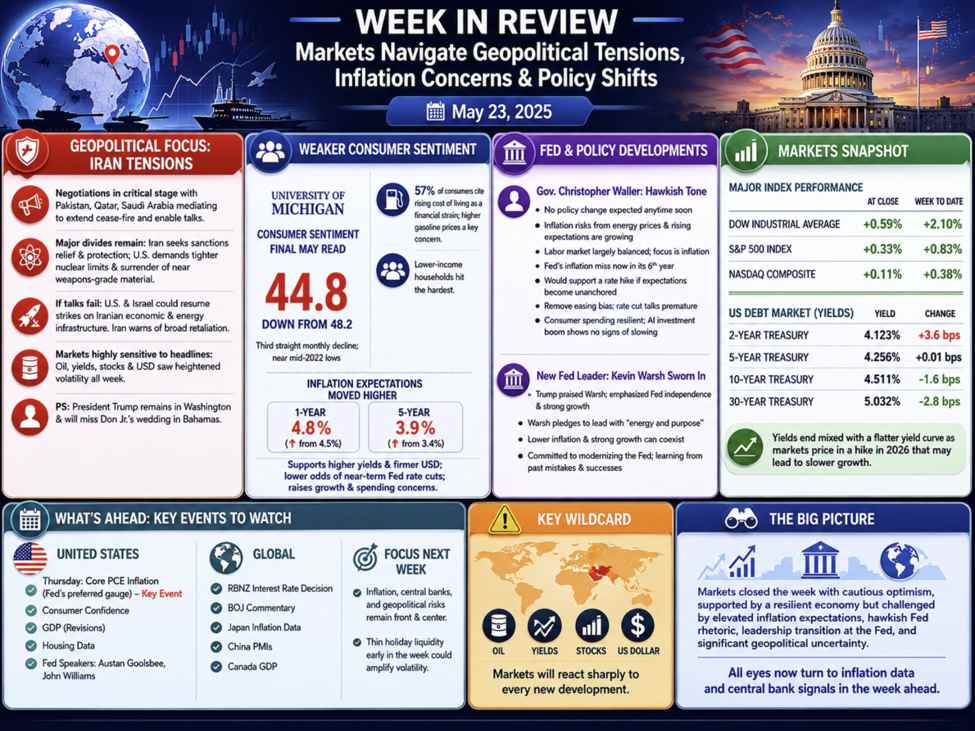
The financial markets are closely monitoring developments in Iran's nuclear negotiations, where reports indicate a potential agreement has been reached in Tehran. Simultaneously, the Federal Reserve's new chair, Kevin Warsh, and Governor Waller have emphasized a cautious, data-dependent approach to monetary policy, signaling no immediate changes. U.S. consumer sentiment fell below expectations in May, while Canada reported stronger-than-anticipated retail sales and producer price index (PPI) data. These mixed signals highlight ongoing economic uncertainty.
For traders, the Iran nuclear deal could reduce geopolitical tensions, potentially easing pressure on oil prices and stabilizing risk assets. However, the Fed's hawkish stance and stagnant consumer sentiment may weigh on equities and support the U.S. dollar. The upcoming Fed meetings and Iran negotiations will be critical for market direction.
Investors should watch for confirmation of the Iran deal's details and any shifts in Fed policy rhetoric. The dollar's strength against the euro and gold's performance as a safe-haven asset will be key indicators. Gulf investors may also assess how regional stability impacts energy markets and cross-border trade.